



BIOCHECK was started with the intention to give authentic and quality reports in the world of cheap rates and no quality assurance.
Your Health, Our Priority
Book a Home Visit Now!
Book a home visit with BIOCHECK and take
the step towards a healthy life
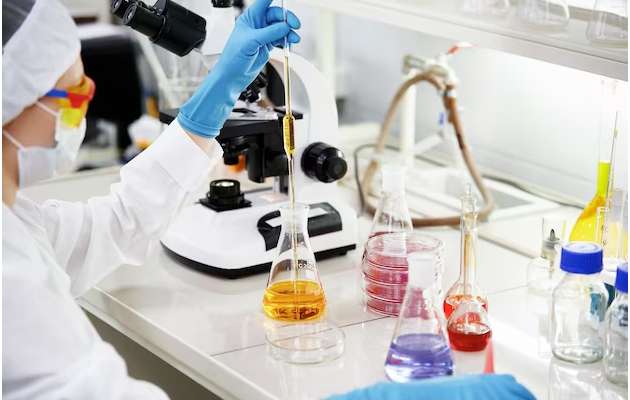
Clinical biochemistry refers to the analysis of the blood plasma (or serum) for a wide variety of substances—substrates, enzymes, hormones, etc—and their use in diagnosis and monitoring of disease. Analysis of other body fluids (eg, urine, ascitic fluids, CSF) is also included. Biochemistry tests should be accompanied by full hematology because evaluation of both together is essential for optimal recognition of many of the most characteristic disease patterns.
Biochemistry is the study of chemical and biochemical components in the body for preventing, diagnosing and managing the disease. Diseases like diabetes, heart attacks, infertility, thyroid problems, cystic fibrosis and meningitis can be diagnosed by the examination of body fluids including blood, urine and CSF. Different specimens collected are Serum, Plasma, Urine, Cerebrospinal spinal fluid (CSF).
Before samples are collected, a list of differential diagnoses should already be established based on the history and clinical examination. Then, additional appropriate tests can be added to the basic panel below.
Making a diagnosis entails establishing a list of differential diagnoses based on the history and clinical examination. Based on this list, tests can be selected to include or exclude as many of the differentials as possible. Yet more tests may be necessary until only one of the original list remains to determine the diagnosis. This discipline involves the analysis of cells, blood and other body fluids for their chemical, biochemical and hormonal components. Biochemical tests are most often applied to samples of serum, plasma and urine where levels of specific chemicals are measured and the results compared with those representative of a healthy individual.
An increase or decrease in any particular component(s) can help to identify a disease process. Measurement of blood glucose (sugar) and lipids (fats) are among the commonly performed tests in the biochemistry laboratory. Panels of tests can be used to assess the function of major body organs such as the liver, kidneys and heart. Specialized assays are used to measure the levels of various hormones in the blood.
Biochemical tests are widely used to diagnose disease and monitor treatment, so if a patient is having a blood test done, there is a good chance that at least one of the specimens collected will be sent for biochemical analysis. For example, someone with suspected viral hepatitis will likely have blood sent (to a virology laboratory) for viral serology but will also have blood sent to the clinical biochemistry laboratory to assess the degree of liver damage caused by the virus. Less common uses for biochemical tests include screening for disease and assessing prognosis.
Biochemical tests, which measure substances (protein, sugar, oxygen, etc.) in blood and urine, are widely used in the diagnosis of diseases and the determination of treatment. The activity of each organ in the body affects one or several of the specific biochemical indicators. Therefore, the determination of concentration and comparison of biochemical indices in blood components can help doctors diagnose many diseases such as liver diseases such as high liver enzymes, hepatitis, diabetes, fibrosis. atherosclerosis, myocardial infarction.